A Comprehensive Healthcare Management Degree Guide

Healthcare management involves running the business and operations side of healthcare. Healthcare professionals are in charge of keeping medical facilities, such as hospitals, medical centers, and doctors’ offices, functioning and serving the community. They make sure each facility provides the best possible care and operates smoothly.
It is an essential field because management is a pillar for hospitals and medical facilities, like any other business. So, they need business-minded and qualified people to run these operations and help hospitals and clinics meet their financial or strategic goals. The demand for skilled healthcare managers continues to grow. According to the US Bureau of Labor Statistics, employment of medical and health services managers is projected to grow 23% from 2024 to 2034, much faster than the average for all occupations.
If you’re interested in this field but don’t want to perform clinical duties, this pathway provides the opportunity to make a difference in people’s lives. A career in healthcare management field seems like a profitable vocation to pursue. But how exactly do you begin? What’s the scope for entry-level job seekers? How much does a master’s in this field earn? We’ll talk about all that and more in this healthcare management career guide, so let’s begin.
Key takeaways
- Healthcare management focuses on the business, leadership, and operational side of healthcare. It includes helping hospitals, clinics, and medical offices run efficiently while supporting quality patient care.
- The degree you need depends on your career stage and goals: an associate degree can help you enter the field quickly. A bachelor’s degree is the most common path for management-track roles, and a master’s degree is best for senior leadership or specialization.
- Healthcare management programs teach applicable leadership, budgeting, operations, compliance, communication, quality improvement, and data-driven decision-making skills.
- Healthcare supply chain management and healthcare technology management are becoming more popular among students who prefer to specialize in operations, systems, equipment, and efficiency.
- The selection of the appropriate school is not only about cost. The students are to consider accreditation, program format, faculty experience, career support, internship opportunities, and long-term value.
- Online healthcare management degrees may be a good choice among working adults and students who require flexibility, however, the quality of the program, its structure, and student support should be considered.
- Accreditation is necessary as it safeguards the degree worth, enhances transfer and graduate study opportunities and assists students to verify that the program is of accepted academic standards.
- Low-cost and fast-tracked programs may be useful, but the most effective option is a program that is affordable, fast, supportive, and career-oriented and not necessarily the cheapest or the fastest one.
What is Healthcare Management?
Healthcare management is the field of overseeing the basics and necessities of healthcare facilities like hospitals, clinics, nursing homes, etc. Instead of dealing with healthcare directly, healthcare management professionals ensure that health institutions run efficiently. Usually, healthcare management focuses on a few critical areas of hospitals and medical institutions, such as:
- Managing staff, including doctors, nurses, etc.;
- Handling finances and accounts;
- Regulating compliance and human resources;
- And improve services, policies, etc.
So, the focus of healthcare management is on running a hospital as an organization seamlessly. Thus allowing doctors and nurses to practice their profession in an environment that ensures proper facilities.
Who are Healthcare Management Professionals?
Healthcare management professionals are responsible for overseeing healthcare facilities. People in these roles work to enhance treatment options and direct organizational policies and procedures. Healthcare management professionals are not directly involved with patient care but look at the bigger picture to ensure services offered benefit patients and empower staff. They ensure budgets to run at maximum efficiency and quality, and usually manage a team of medical staff.
Job responsibilities
Responsibilities of a healthcare management professional or a healthcare management team will vary according to the position, but typically include:
- Developing and implementing organizational-level goals and procedures
- Researching and implementing strategies to improve standards of patient care and facilities offered
- Recruiting, training, and managing medical and administrative staff
- Managing finance and budgets
- Complying with health and data protection regulations
- Collaborating with health boards, stakeholders, medical staff, and investor
What Skills Do You Need
Healthcare managers need specific professional skills that help them run hospitals, clinics, and healthcare organizations effectively. These skills focus on managing healthcare operations, improving patient services, and making sure facilities follow healthcare regulations. Important skills for a healthcare management degree include:
- Operations management and leadership: Managing daily hospital or clinic operations and patient flow
- Policy making and regulation knowledge: Understanding healthcare laws, compliance rules, and patient privacy regulations
- Quality improvement skills: Improving patient safety, care standards, and service quality
- Data analysis: Using patient data, reports, and performance metrics to make better decisions
- Revenue cycle management: Understanding billing, insurance claims, and payment systems in healthcare
- Strategic planning and growth management: Planning services, staffing, and resources for long-term healthcare growth
- Technology management and automation: Working with electronic health records (EHR) and other healthcare systems
Who Should Study Healthcare Management?
Healthcare management is ideal for those who wish to work in healthcare, albeit in an administration role. Those who are passionate about providing health, but are more akin to business or management roles, will find a career in healthcare management just right for their ambitions. Usually, people with healthcare management degrees work in hospital administration. So, you should study it if you wish to supervise things like:
- Managing staff like doctors, nurses, etc.;
- Regulating compliance among employees;
- Managing accounts and finances;
- And manage administrative elements.
Now, what happens if you’re at a certain point in your career? You might pursue a master’s degree in healthcare management if you’re already a business graduate. Otherwise, you might look for entry-level healthcare management jobs with a certificate or diploma. Here’s who should study healthcare management.
| Career/Qualification Point | Why? |
| Healthcare Professionals | If you’re working as a nurse or medical assistant, you’d know what a hospital or clinic needs better than anyone. Becoming qualified to manage those elements will elevate your career. |
| Business Graduates | If you have a business background, then a healthcare management master’s degree will land you in higher positions in any clinic, hospital or medical facility. |
| Recent Graduates | If you’re a recent graduate and wish to change your field or elevate your status, earning a healthcare management degree will open multiple doors for you. |
| Mid-Career Professionals | Mid-career professionals who wish to change or switch to management in healthcare. This is a common scenario for those with an inclination toward healthcare or the medical field in general. |
| Policymakers and Administrators | Policymakers or administrators who are already working as professionals in healthcare. This will allow them to understand their field on a more intimate level. |
What Do You Study in a Healthcare Management Degree Program?
Healthcare management degrees focus on critical areas of management, just like any other business management degree. The specializations might focus on specific areas, but a general bachelor’s or master’s degree will focus on:
- Healthcare Operations
- Financial Management
- Healthcare Policy and Law
- Human Resources Management
- Quality Improvement
This management program will teach the same basics of human resources, accounts, and administration— with the addition of courses in healthcare operations/policy and law. Some of the healthcare management degree courses under these categories.
Are there Different Types of Healthcare Management Degrees?
There are various degree types in management for the medical field. For instance, the healthcare management degree requirements will be focused mainly on the business aspect. But a particular specialization might have its specific admission necessities. One such example would be hospital management degree requirements, which require a GPA of 3.5 or above.
| Degree | Course Title | Description |
| Certificates | Healthcare Information Literacy & Data Analytics | A branch of data analytics focused on healthcare. |
| Advancing Health Equity: A Guide for Reducing Bias | Focuses on promoting diversity and avoiding bias in health-related professions. Falls under Human Resources and healthcare policies. | |
| Bachelor’s | Principles of Healthcare | Fundamental concepts of healthcare, including essential healthcare practices. |
| Healthcare Ethics and Values | Ethical considerations and general morals of healthcare as a profession. | |
| Healthcare Management Information Systems | Focuses on management systems, computers, programs, etc., necessary to ensure the smooth running of healthcare operations. | |
| Patient Safety Management | Focuses on patient safety and quality of healthcare. | |
| Healthcare Policy & System | General healthcare policies for the state, country, and hospitals. | |
| Master’s | Health Systems Management | Same as healthcare management information systems, but at an advanced level. Additional management elements to lead healthcare management system teams. |
| Financial Management and Accounting | Managing finances and accounts of hospitals, clinics, and other healthcare institutions. | |
| Innovation and Entrepreneurship in Healthcare | Focuses on entrepreneurial practices in healthcare and innovation to provide a higher degree of medical care. | |
| Healthcare Policy, Politics, and Law | Higher/advanced level of Healthcare Policy & System, with the addition of management leadership. | |
| Leadership and Change Management | Developing leadership to lead various management departments in the healthcare profession. |
1. Associate Degree
Typically, an associate degree in healthcare allows people to get into the workforce more quickly, or lets people changing careers get a practical credential without having to do a full four years. It usually takes about 2 years to complete a degree, but you can opt for an accelerated program to finish it faster.
These classes teach you the fundamentals of daily operations in offices and departments.
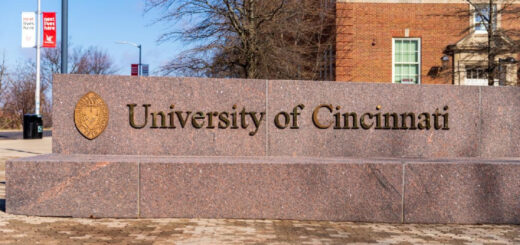
Take the University of Cincinnati online Associate of Applied Business in Healthcare Management Technology degree as an example. The two-year program includes an all-embracing coverage of the management of healthcare departments and the management of physician offices. Students in this degree program are required to take the following courses:
- Medical Terminology: This course teaches the language used in healthcare. Students learn medical roots, prefixes, and suffixes, along with terms related to different body systems.
- Health Information Ethics: This class focuses on patient privacy, confidentiality, and the ethical and legal responsibilities of handling medical information.
- Physician Practice Management: This course explains how medical offices and clinics operate, including managing staff, scheduling, and improving workflow.
- Healthcare Finance: Students learn how healthcare organizations manage money, including budgeting, costs, and reimbursement systems.
- Statistics and Research Methods: This course teaches how to analyze healthcare data and use it to support decision-making and improve services.
- Legal Environment of Business: This course introduces business laws, contracts, compliance rules, and regulations that affect healthcare organizations.
- Introduction to Microeconomics: This course explains basic economic principles and how they influence business decisions in healthcare and other industries.
2. Bachelor’s Degree
With a bachelor degree, you are no longer concerned with how the office functions, but how the organization functions. You develop skills and learn how:
- Decisions are made;
- Budgets influence staffing and services;
- Policy and regulation influence operations;
- Quality and safety programs mitigate risk;
- Leadership styles influence teams.
Further, you also begin to understand how to quantify performance based on data, as contemporary healthcare management relies on metrics such as wait times, bed turnover, patient satisfaction indicators, readmission rates, and revenue cycle performance.
Two Formats in Bachelor’s Degree
One of the most important decisions at the bachelor’s level for a student is whether to major in a specialized field or a general business major with a healthcare orientation.
- Specialized Degree Program
The specialized program is built around healthcare systems at the outset and frequently extends into healthcare operations, patient safety, and healthcare policy.
The Bachelor of Science in healthcare Management at the University of Alabama at Birmingham is a degree program designed specifically for healthcare leadership, operations, and systems. This program prepares students to lead within hospitals, clinics, and ambulatory care centers.
Students complete core courses that focus directly on healthcare management, including:
- Principles of Management in healthcare
- Healthcare Law and Ethics
- healthcare Systems
- Medical Terminology for Health Professionals
- Accounting and Finance for healthcare
- Organizational Studies in healthcare
- Operations Management in healthcare Organizations
- Quality Management in healthcare
Since this degree is centered on healthcare, students spend most of their coursework on concepts, regulations, and skills unique to healthcare settings.
- Business Management Degree with Healthcare Focus
A broader business program typically includes general business coverage and then applies those concepts to healthcare through a concentration or electives.
For instance, the Bachelor of Arts in Business (healthcare) offered by Arizona State University, through the W. P. Carey School of Business, combines a general business education with a healthcare focus.
Core business courses include:
- Financial Accounting: Basics of financial reporting and analysis.
- Management Principles: Leadership and organizational behavior.
- Marketing: Knowledge of markets and customer behavior.
- Economics: Fundamental economic theory and its application in business decision-making.
- Computer Information Systems: Studying business tools and technology.
- Supply Chain Management: Optimization of logistics and processes.
And on top of these general business core courses, students also take courses related to:
- Healthcare Industry Basics: The basics of healthcare delivery and economics.
- Healthcare Coordination and Innovation: business strategy in health systems.
- Healthcare Communication and Analytics: Applying data and communication expertise to a healthcare setting.
This model allows students to gain general business knowledge applicable to healthcare and other fields. Graduates may also work in non-healthcare areas of healthcare operations, consulting, insurance, or business.
https://www.tiktok.com/@vitoeducation_/video/7373269778653383954?is_from_webapp=1&sender_device=pc&web_id=7591429465537840670
3. Master’s Degree
A master’s education is a good choice in case you are aiming to become a senior leader or if you are eager to speed up your career development once you already have some experience.
A significant number of individuals pursue an online master’s degree in healthcare management after several years of experience in operations, administration, or other similar positions, since they are prepared to take on greater responsibility and require more training in strategy, finance, systems leadership, and organizational improvement.
MHA vs MBA Degrees: Which is the Best Option?
The Master of Health Administration (MHA) and the MBA with a healthcare focus are two of the most popular graduate programs.
- MHA Degree
MHA is constructed directly around healthcare leadership and is therefore more likely to delve into healthcare policy, delivery systems, quality management, and operational leadership within hospitals, clinics, and public health organizations.
For instance, the Johns Hopkins University Master of Health Administration (MHA) is among the oldest healthcare leadership programs in the U.S. It is designed for future healthcare executives and focuses on strategic leadership, health systems management, quality improvement, health policy, and operational leadership in hospitals, clinics, and public health organizations. Typical courses include:
- Introduction to the U.S. Healthcare System
- Statistical Reasoning in Public Health
- Fundamentals of Management for healthcare Organizations
- Fundamentals of Budgeting and Financial Management
- Principles and Applications of Advanced Payment Models in Population Health Management
- Medical Practice Management
- Introduction to Healthcare Quality and Patient Safety
- Strategic Leadership and Decision Making
- Human Resources in Health Organizations
- Legal and Ethical Issues in Health Services Management
- MHA Residency & Capstone
The program includes classroom learning and real-world experience to develop the managerial and analytical skills required to lead in health services delivery across multiple sectors
- MBA Degree
MBA is a more general business leadership degree that can be used in healthcare, but is not restricted to it, and tends to focus on strategy, corporate finance, operations management, and leadership development in a broader sense.
An example of a more general business leadership degree with a healthcare focus is the MBA in healthcare concentration at the McCombs School of Business (University of Texas at Austin).
This program begins with general MBA core courses in strategy, finance, marketing, and operations management and then gives students the opportunity to specialize in healthcare-related issues including the healthcare business ecosystem, healthcare analytics, and healthcare technology commercialization.
It is designed to provide leaders with general business skills that can be tailored to the healthcare sectors, including provider organizations, life sciences, and health technology. For example, changes brought in through the Affordable Care Act (ACA) affected insurance coverage, payment models, and the way healthcare organizations plan services and manage costs, which is why healthcare leaders need both strong business knowledge and an understanding of how policy affects the industry.
The courses include:
- The Healthcare Business Ecosystem
- Healthcare Technology Innovation
- Health Innovation Dexterity
- Fundamentals of Health Innovations
- Healthcare Law and Policy (elective)
- Informatics for Healthcare Professionals (elective)
- Budget and Finance in healthcare (elective)
- Leading and Managing Complex Healthcare Systems (elective)
Further Core MBA business classes like Financial Accounting, Marketing Management, Finance, Operations Management, Strategy, and Organizational Behavior.
| Point of Difference | MHA Degree | MBA Degree |
| Main focus | Focuses directly on healthcare leadership and management | Focuses on general business leadership with a healthcare option |
| Best for | Students who want to work mainly in hospitals, clinics, health systems, or public health organizations | Students who want broader business skills that can be used in healthcare and other industries |
| Core subjects | Healthcare policy, healthcare systems, quality improvement, patient safety, and health services leadership | Strategy, finance, marketing, operations, and leadership development |
| Career path | Better suited for healthcare administrator, hospital manager, clinic leader, or health services executive roles | Better suited for business leadership roles in healthcare, consulting, life sciences, or health technology |
| Learning style | Built around healthcare case studies, healthcare delivery, and health organization management | Starts with general business training, then applies it to healthcare through electives or concentration subjects |
What Niches Can I Specialize with a Healthcare Degree?
Healthcare Supply Chain Management Degree
A healthcare supply chain management degree is concerned with the way hospitals and clinics purchase, store, track, and distribute medical supplies and equipment. This encompasses such items as surgical equipment, drugs, personal protective gear, and diagnostic equipment.
Supply chain in healthcare is not only about cost reduction. It is concerned with ensuring that the right things are at the right time. Patient care may be compromised in case of missing or delayed supplies. Surgeries may be postponed. Treatments may be slowed. This is why supply chain leaders are so significant within health systems.
This specialization typically includes:
- Purchasing and procurement
- Vendor relationships and contracts.
- Inventory control systems
- Logistics and distribution
- Predicting supply demand.
- Performance tracking and cost control.
Clear data is used to measure supply chain performance. Leaders tend to follow such numbers as cost per unit, fill rates, frequency of shortages, and on-time delivery. Due to this reason, the field is a good match to individuals who like systems, data, planning and solving operational issues in an organized manner.
The University of Nebraska at Omaha offers a graduate degree called the Master of Healthcare Logistics & Supply Chain Management. It’s designed for people who want to specialize in how healthcare organizations manage supplies, equipment, and logistics, especially in high-pressure situations where shortages and delays can affect patient care.
Healthcare Technology Management Degree
A degree in healthcare technology management is concerned with the selection, maintenance, and safe use of medical technology. This involves medical equipment, diagnostic equipment, monitoring equipment and in some cases, coordination between clinical departments and IT departments.
Technology has become an important part of healthcare. Machines track patients, aid in surgery and aid in diagnosis. Patient safety may be compromised in case the equipment fails or is not well-maintained.
A good example of this in practice is the Biomedical Engineering Equipment Management System (BEEMS) used at Far Eastern Memorial Hospital in Taiwan. The system was built to help the hospital track medical devices, schedule maintenance, monitor repair records, manage contracts, and connect equipment data with other hospital systems.
This degree involves studying about:
- Medical equipment lifecycle management.
- Safety and compliance of equipment.
- Liaising between clinical and technical staff.
- Contracting vendors to maintain and upgrade.
- Tracking technology performance and reliability.
Healthcare Technology Management specialization is perfect when you like to work at the border of healthcare operations and technology. It is also growing because AI is now being used to improve medical management, from predicting equipment problems to supporting faster operational decisions. In the US, NYU Langone Health uses predictive analytics and AI across its health system to improve operational efficiency and help staff make real-time decisions, showing how technology management is becoming a bigger part of healthcare leadership.
MCPHS University offers a BS in Healthcare Management and Technology, which is a good real-world example of a healthcare technology-focused management pathway. The program combines healthcare operations with technology, data, compliance, and system improvement.
Why Is Accreditation Important When Choosing a Healthcare Degree?
Regional (institutional) accreditation means the university meets recognized educational standards. This protects the value of your degree. Let’s start with the important ones.
Council for Higher Education Accreditation (CHEA)
The Council for Higher Education Accreditation (CHEA) is a national body that recognizes certain accrediting agencies in the U.S.; it does not accredit universities. Instead, it evaluates and recognizes the agencies that do the accreditation. This protects the legitimacy of an accrediting body or school to students.
CHEA has an official directory to check recognition status of colleges, universities, and accrediting agencies.
Regional (Institutional) Accreditation
The term regional accreditation now called institutional accreditation signifies that a university, as a whole, has met certain educational benchmarks. This allows for the safeguard of the degree’s worth, as well as the simplifying of the processes involved with credit transfers and pursuing education at higher levels.
The following are a few examples of accepted institutional accreditors:
- Higher Learning Commission (HLC)
- Southern Association of Colleges and Schools Commission on Colleges (SACSCOC)
- Middle States Commission on Higher Education (MSCHE)
CAHME (Graduate Programs in Healthcare Management)
Graduate healthcare management programs accredited by CAHME (Commission on Accreditation of Healthcare Management Education) demonstrate quality of education delivery and acceptance. CAHME gives accreditations to master’s level healthcare management programs like MHA degrees, validating that such programs adhere to healthcare education and professional leadership competencies.
AACSB (Accreditation of Business Schools for MBA Programs)
AACSB (Association to Advance Collegiate Schools of Business) is a respected accreditation for MBA programs. An AACSB accreditation is recognition for a business school that has met sufficient standards for quality in curriculum, faculty, and student performance.
How much does it cost to enroll in a healthcare management program?
Job opportunities in healthcare management are great, but your degree shouldn’t make you financially stressed. It’s better to think in terms of value than cost.
Many students hunt for the cheapest online healthcare management degree, but “cheap” can be expensive if it leads to:
- Poor credit transfer options
- Weak career services
- Little employer recognition
- Low graduation support
- Hidden fees (technology fees, proctoring fees, graduation fees)
Better approach: optimize for total value, not just sticker price. Instead, consider these factors:
- Total tuition + fees
- Transfer credit policies
- Included support (tutoring, advising, career coaching)
- Internship/practicum help
- Alumni outcomes and employer partnerships
- Accreditation status and public reputation
On the other hand, another major focus is speed. Some universities have accelerated programs (such as 8-week terms) or offer a competency-based approach. However, these only benefit you if you are the kind of person who can manage the workload consistently.
For individuals with limited to no experience in healthcare, pursuing a degree at a more relaxed pace is more beneficial as it provides time to acquire practical skills and gain requisite experience.
Cheapest Online Healthcare Management Degree Programs
Below are five affordable schools that offer healthcare management degrees (tuition can change, and costs vary by residency and fees). The annual tuition figures come from a 2026 affordability ranking that reports manually researched tuition data.
| University | Degree Program | Estimated Cost |
|---|---|---|
| South Texas College | Bachelor of Applied Technology in Medical and Health Services Management (Online) | $7,620 |
| Midland College | Bachelor’s Degree in Health Services Management | $6,765 |
| University of Texas Permian Basin | Bachelor of Business Administration in Healthcare Management | $6,576 |
| Norfolk State University | Bachelor of Science in Health Services Management | $6,228 |
| American College of Education | Bachelor of Science in Healthcare Administration | $6,450 |
Cost and acceptance rates for Bachelor’s programs
| University | Degree Title | Acceptance Rate | Average Cost (University) |
| Texas Tech University | Bachelor of Science in Healthcare Management | 67% | $20,000 |
| Maryville University | Bachelor’s In | 88% | $27,000 |
| Georgia Military College | BAS in Healthcare Management | 95-100% | $14,000 |
| Columbia College | Bachelor’s in Healthcare Management | 4% | $66,000 |
| The University of Alabama At Birmingham | Bachelor of Science in Healthcare Management | 87% | $17,000
|
Cost and acceptance rates of Master’s Programs
| University | Degree Title | Acceptance Rate | Average Cost |
| Bay Path University | Online MS in | 76% | $39,000 |
| University of Maryland | School of Public Health | Master of Public Health: Health Care Management | 45% | $17,000 |
| Johns Hopkins Carey Business School | Master of Science in Health Care Management | 7% | $29,000 |
| UA – Eller College of Management | Master of Healthcare Management | 87% | $30,000 |
| Columbia University Mailman School of Public Health | Master of Health Administration | 4% | $23,000 |
How to Choose the Right School for Healthcare Management
Choosing the right school is about finding a program that fits your location, schedule, budget, and long-term goals. Some students prefer to study close to home. Others need flexibility and choose online programs. Both options can work well if you choose carefully.
Option 1: Finding a Healthcare Management Program Near You
Many people search for a healthcare management degree in their city or state because hospitals, clinics, and long-term care facilities usually hire people who understand the healthcare system in that region.
When you study locally, you may have the following benefits:
- Availability of internships or practicums in local hospitals.
- Local healthcare organization guest speakers.
- Connection with people in your field.
- Better local employment ties upon graduation.
If you have already decided where you would like to work, a local program may help you establish relationships early.
Option 2: Choosing an Online Healthcare Management Program
An online healthcare management degree may be a good fit for you if you are a full-time employee or you have other commitments outside of school that would otherwise impact your ability to attend classes in-person. With online programs, you are able to complete your coursework from home. Whether a program is online or in-person, the quality of the program is of the utmost importance. You should consider the following:
- Detailed course outlines
- Faculty with relevant experience
- Academic assistance
- Organized career services and advising
- Positive graduation statistics
Online classes require a certain degree of self-motivation and commitment. If you are highly organized and able to prioritize your tasks, you will be successful in an online program.
Related: How to Get into a Healthcare Management School with Undergraduate Program
What Degree Do I Need for the Different Healthcare Management Fields?
| Degree Level | Degree Title | College/University |
| Associate/College Degree | AA In Healthcare Management Technology | University of Cincinnati Online |
| Associate in Health Care Management | Penn Foster College | |
| AAS in Healthcare Administration | St. Louis College of Health Careers | |
| Bachelor’s/Graduate Degree | Bachelor of Science in Healthcare Management | The University of Alabama At Birmingham |
| Bachelor of Science in Healthcare Management | Texas Tech University | |
| Bachelor’s In | Maryville University | |
| Master’s/Post-Graduate Degree | Master of Healthcare Management | UA – Eller College of Management |
| Master of Health Administration | Columbia University | |
| MPH: Health Care Management | University of Maryland |
You’ll find plenty of other business degrees with a healthcare management concentration in the coursework. It depends on the type of field or particular specialty that you wish to pursue such as nursing administration, clinical facilities, compliance, etc. Therefore, it’s essential to explore the specialties and concentrated programs for specific healthcare management fields.
How to Get a Degree in Healthcare Management?
Once you choose the degree level you want, the process becomes much easier to understand. Most students follow a similar path: meet the admission requirements, apply to a program, complete the required courses, and finish with a final project or capstone. The exact steps can vary between universities, but the overall journey is usually very similar.
Step 1: Verify the Requirements
You must ensure that you have the minimum requirements of admission before you apply. Here are some of the choicest and top healthcare management graduate degrees and their requires.
| Title | Level | Requirement |
| BS/BSBA in Healthcare Management | Bachelor’s | High school diploma/GED, official transcripts, personal statement, SAT/ACT scores, and application fee. Usually requires 120 credits and includes a capstone project. |
| Master of Healthcare Administration (MHA) | Master’s | Bachelor’s degree in a related field, 36-54 credits, letters of recommendation, personal statement, and GRE/GMAT scores, depending on the university/school. |
| Master of Public Health (MPH) | Master’s | Bachelor’s degree, letters of recommendation, personal statement, and possibly GRE scores. Focuses on public health aspects within healthcare management. |
| Certified Healthcare Manager (CHM) | Certification | Must have a bachelor’s degree and at least two years of healthcare management experience. |
| Certified Medical Manager (CMM) | Certification | Requires a bachelor’s degree and at least three years of management experience in healthcare. Like CHM, you are required to pass an exam. |
| Graduate Certificate in Healthcare Management | Certification | Typically requires a bachelor’s degree and focuses on specialized topics within healthcare management. |
| Doctor of Healthcare Administration (DHA) | Doctoral | Master’s degree in a related field, professional experience, letters of recommendation, and a dissertation or capstone project. |
In the case of undergraduate programs, the schools normally demand a high school diploma or GED. Other colleges might also require you to take placement tests in areas such as math or writing, particularly when you have not been in school in a few years.
Graduate programs typically demand a bachelor degree. Other programs also favor those who already have some professional experience, particularly when the program is on leadership or healthcare administration. Working or volunteering in a healthcare facility can also provide you with experience.
Schools can request standardized tests in certain instances and in other cases they can waive them based on your academic background or work experience.
In case you are not sure about applying, concentrate on the skills that you can work on. Good writing abilities, the knowledge of the basic spreadsheet, and some experience working in healthcare settings can make you successful in the application process and your future courses.
Step 2: Complete the Application Process
The application process is straightforward, though graduate programs often ask applicants to be more explicit about their objectives. Schools would like to know that you have a basic understanding of healthcare management and realistic career plans.
An average application includes:
- Past school academic transcripts.
- A resume or an overview of your work experience.
- A statement of purpose of what you want to do in your career.
- Letters of recommendation (not always optional)
The statement of purpose should clearly explain your current background, your future career goal, and how the degree will help you get there. It is stronger when it focuses on specific goals, such as improving patient flow, reducing wait times, strengthening quality programs, or managing healthcare budgets better.
Healthcare Management Careers & Education Requirements
There are quite a few career paths that you can take. Simply search for healthcare management jobs near me, and you’ll see a variety of job titles. However, some of the most common healthcare management career paths include:
Now, how do you pursue these jobs? What sort of healthcare management degree will you need? And what is the specific healthcare management job description in each career? Here are some of them:
| Career | Education | Job Description |
| Hospital Chief Executive Officer | Master’s degree (MHA, MBA) | Overseeing the entire hospital operations, including setting strategic direction and ensuring quality care. |
| Chief Financial Officer (CFO) | Master’s degree (MHA, MBA) | Managing the financial operations, budgeting, and financial planning of the healthcare facility. |
| Health Information Manager | Bachelor’s or Master’s degree in Health Information Management | Handling patient data management while maintaining regulations and managing health records. |
| Medical Office Manager | Bachelor’s degree in Healthcare Management or Administration | Managing daily operations of a medical office and supervising staff, while managing patient relations. |
| Nursing Home Administrator | Bachelor’s or Master’s degree in Healthcare Administration | Ensuring smooth operations and compliance with regulations and quality care. |
| Healthcare Compliance Officer | Bachelor’s degree in Healthcare Administration or Law | Ensures healthcare organizations comply with laws and regulations and conduct audits. |
| Medical Billing and Coding Specialist | Certificate or Associate’s degree in Medical Billing and Coding | Responsible for processing patient billing and coding for insurance claims. |
| Healthcare Consultant | Master’s degree in Healthcare Management or Business Administration | Advising healthcare organizations on improving efficiency, reducing costs, and enhancing patient care. |
| Practice Administrator | Bachelor’s degree in Healthcare Management | Supervising the operations of a medical practice, including staffing, budgeting, and patient care. |
| Chief Operating Officer (COO) | Master’s degree (MHA, MBA) | Responsible for the day-to-day operations of a healthcare organization. |
Some job titles require entry or mid-level education, while others require advanced education like master’s or graduate management certification. Now, any career counselor would suggest pursuing a business administration degree before you go for a healthcare management master’s degree.
Why is that? Because it keeps the doors open to other fields while allowing you to pursue your desired career. However, with a healthcare management degree (bachelor’s), you can still pursue other options, like a master’s in business administration/management.
Healthcare Management Education and Salaries
Any healthcare management career salary depends on experience, job title, and particular department. For instance, even health and social service managers earn different wages based on sectors or departments.
- Master’s in healthcare management jobs
According to BLS, some of the top masters in healthcare management jobs offer the following salaries in different sectors:
| Sector | Salaries |
| Hospitals (State, Local, or Private) | $128,700 |
| Government (Medical Facilities, Govt departments) | 125,500 |
| Outpatient Care Centers | 104,700 |
| Offices Of Physicians | 102,300 |
| Nursing And Residential Care Facilities | 97,400 |
Source: BLS
- Associates in healthcare management jobs
It’s important to remember that these are high or mid-level positions, and that’s why their salaries are 100K+. So, what about entry-level healthcare management career salaries? And what sort of education do you need? Let’s say you are fresh off high school then you might find the following two programs the best to find entry-level business management jobs in hospitals.
| Program | School | Cost |
| Health Care Management | Northwood University | $12,000-$14,000 |
| Medical Administrative Assistant Diploma | North Iowa Area Community College | $17,000 |
| Medical Billing and Coding Program | American National University | $21,000 (full-time) |
With certifications or programs like these, you can find jobs like:
- Medical Office Assistant
- Medical Secretary
- Medical Records Manager
- Medical Information Processing Operator
- Bachelor’s in healthcare management jobs
On the other hand, if you get a bachelor’s degree, then the course of your career will be slightly different. And you can pursue higher healthcare management job roles. Say you wish to pursue a bachelor’s in healthcare management programs then here are some options:
| Program | School | Acceptance Rate | Cost |
| Bachelor of Science in Healthcare Management | South University | 95-100% | $16,000 |
| Bachelor of Science in Healthcare Management | SUNY Canton | 95% | $15,000 |
| Bachelor of Science in Health Care Management | Utica University | 81% | $24,000 |
Once you pursue these or any other bachelor’s degree, what are the healthcare management career opportunities? Here are some:
| Job Titles | Average Salary |
| Healthcare Administrator | $88,000 |
| Healthcare Department Manager | $72,000 |
| Healthcare Finance Manager | $79,000 |
| Quality and Improvement Manager | $79,000 |
| Medical Records Manager | $62,000 |
- MBA in Healthcare Management in the U.S. Jobs
Aside from this, what is the scope of an MBA in healthcare management in the USA? If you have an MBA or any master’s degree in healthcare management, you can find the following positions:
- Healthcare Chief Information Officer (CIO)
- Healthcare Consultant
- Health Services Manager
- Medical and Health Services Manager
- Health Information Manager
These are some of the top MBA healthcare management careers, but what do they earn? What are the job outlooks? Here are the answers:
| Job Title | Median Salary | Job Outlook |
| Healthcare Chief Information Officer (CIO) | $169,000 | 15% |
| Human Resources Managers | $136,000 | 6% |
| Health Services Manager | $101,000 | 28% |
| Medical and Health Services Manager | $101,000 | 28% |
| Health Information Manager | $104,000 | 8% |
Therefore, there are career opportunities in healthcare management on all levels, from entry-level to advanced.
Conclusion
Healthcare management is a field that combines business skills with the goal of improving how healthcare services are delivered. The degree you choose depends on your career goals, your experience, and how quickly you want to enter the field.
Regardless of the level you are taking, the most significant thing is to pick a program that suits your objectives, time, and finances. An effective healthcare management degree must equip graduates with practical skills, such as leadership, operations, communication, and problem-solving, to help healthcare organizations operate more efficiently and deliver services to patients.
FAQs
Should I choose the fastest route to getting a healthcare management degree?
Is a healthcare management degree worth it?
Yes, it can be worth it if you want to work in the business and leadership side of healthcare. The degree can lead to stable careers in hospitals, clinics, and healthcare organizations. It also offers opportunities to move into management roles over time.
What can you do with a healthcare management degree?
More Business Management Schools
Kickass Healthcare Management Degree Guide
Online Business Schools in the U.S.A. without GMAT Requirements
Which Business Analyst School Should I Choose for My Degree?